
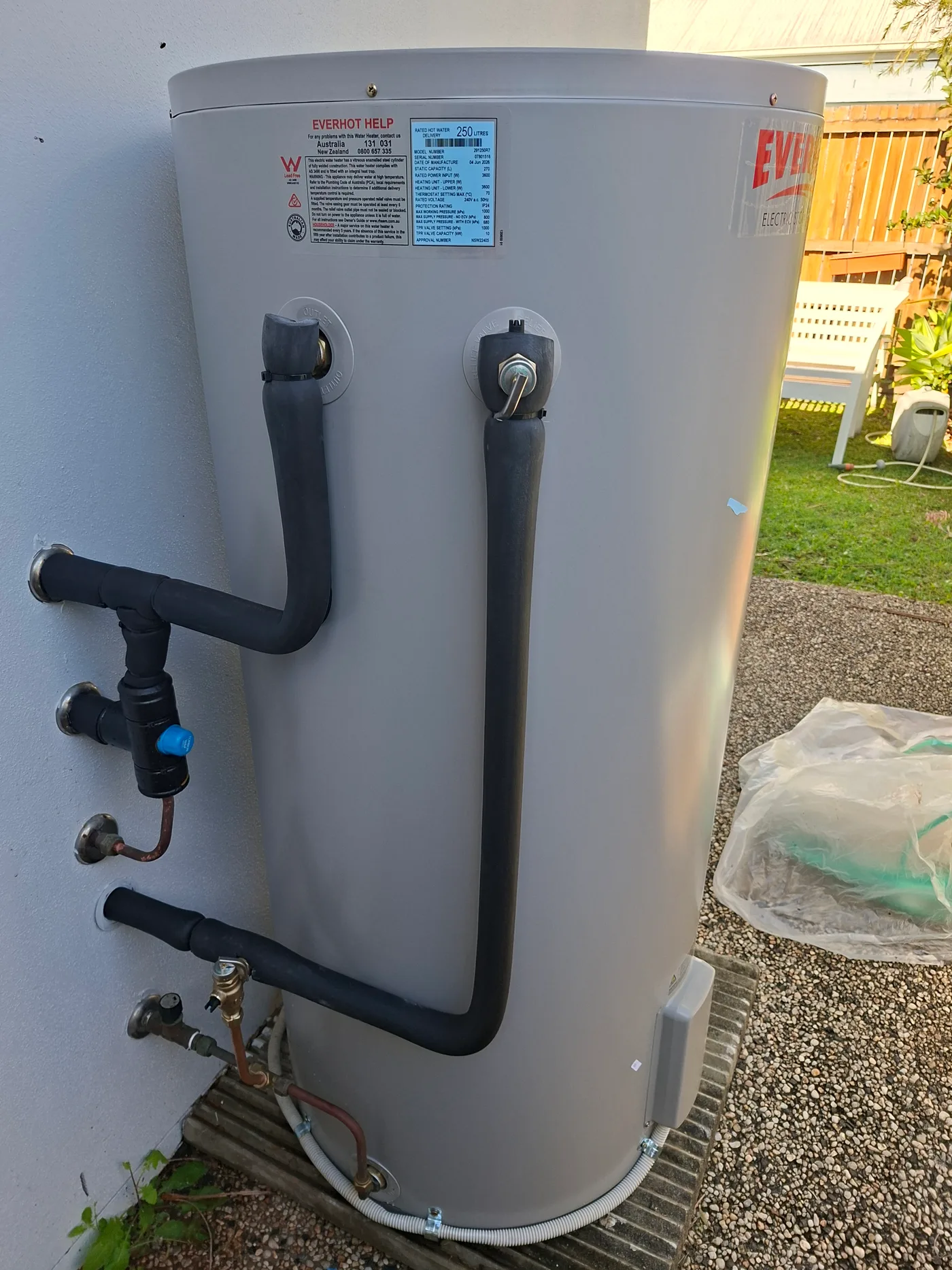
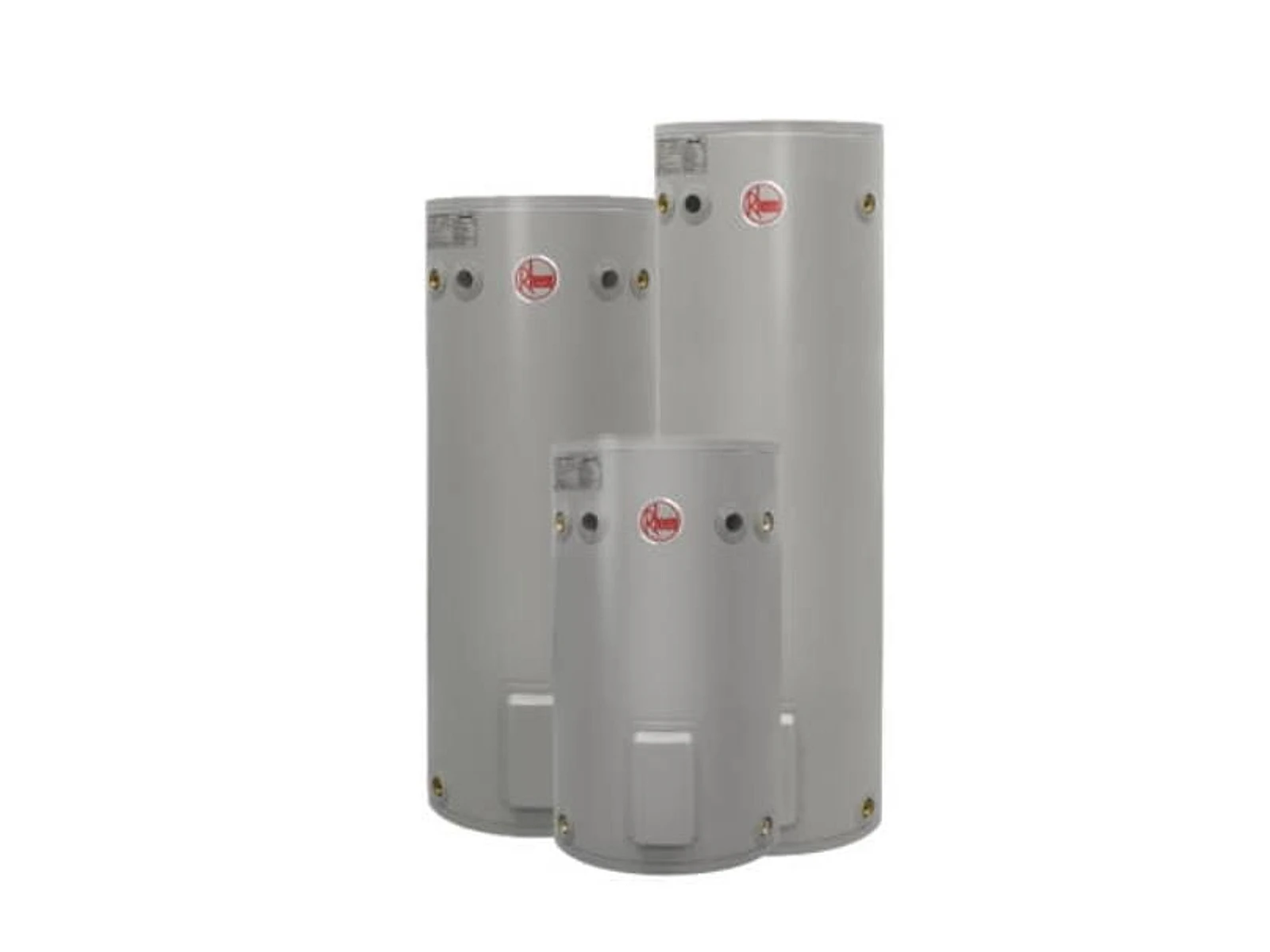
Electric storage is the most common hot water system in Australia and the one most often dismissed. An element inside an insulated tank heats the water, a thermostat holds it at temperature, and it waits until you need it.
Plenty of Sunshine Coast homes and units run one, and for a good number of them it remains the sensible choice. It is generally more expensive to run than a heat pump doing the same job, and that is worth being clear about. It is also cheaper to buy, quicker to install, quieter, and it fits places the alternatives do not. Whether that trade is right for you depends on your property and your circumstances, not on which technology is fashionable.
When electric storage is genuinely the right call
When the replacement is urgent. A failed tank on a Friday afternoon is a different problem from a planned upgrade, and a like-for-like swap that restores hot water today has real value.
When the upfront cost is the constraint. This is a legitimate position, and being talked into a system that stretches the budget to save money over ten years is not always the right outcome for the household making the decision.
When there is nowhere to put anything else. A heat pump needs outdoor space with genuine airflow and tolerance for noise; solar needs a suitable roof. Plenty of townhouses and units have neither, and an electric tank in a cupboard is the system that fits.
When the property is on a controlled-load tariff that already makes the running cost reasonable.
When you are renting the property out short-term or selling soon, and the payback period on an upgrade will not land with you.
Tank size and recovery
Two numbers matter and most conversations only mention one. Capacity is how much hot water is ready. Recovery rate is how fast it reheats once drawn down.
A household with a sharp morning peak and a quiet day can do well on moderate capacity with good recovery. One drawing steadily through the day has a different requirement.
On a controlled-load tariff, capacity matters more, because the tank is heating during set periods rather than on demand and has to carry you through.
Electric storage on a continuous tariff is the most expensive common arrangement to run. On a controlled-load tariff it is considerably better, because the heating happens at a lower rate.
It is worth finding out which yours is on, because people frequently assume they are on off-peak when they are not, and the difference shows up on every bill.
A heat pump uses substantially less electricity for the same hot water, which is the honest comparison. Whether the difference justifies the upfront cost depends on your usage and how long you will be there.
The faults we see most
Element failure, which usually presents as no hot water and a tripped safety switch, or as half your usual hot water on a twin-element tank.
Thermostat failure, which shows up as water that is not as hot as it was, or occasionally as water that is far too hot.
Relief valve failure, which wastes water quietly and is the cheapest thing on this list to put right.
Tank corrosion, which is the end of the system. Rust staining on the casing or water from the tank body rather than a valve means the cylinder has gone.
Sediment in the base of the tank, which causes noise and shortens element life.
The most common upgrade is electric storage to heat pump, and on the water side it is usually straightforward, because the tank is being replaced with another tank. The work is in positioning the outdoor unit and dealing with condensate.
Electric to gas needs a gas supply with adequate capacity. Electric to solar needs a suitable roof.
None of these is a decision to make under pressure with no hot water in the house. If your tank is clearly near the end, that is the moment to look at the options, while you still have the luxury of choosing.
No, though it is often presented that way. It is the least expensive to buy and install, it fits almost anywhere, it is quiet, it is simple, and it can be replaced same-day when one fails. Where the upfront cost matters, or the replacement is urgent, or there is nowhere for a heat pump to go, it remains a sensible answer.
What is a controlled-load tariff?
An arrangement where the tank is on a separate circuit that your retailer energises during off-peak periods, at a lower rate. It changes the arithmetic on running cost considerably, and it changes sizing too: the tank has to hold enough to get through the day, because it is not reheating on demand. Worth checking whether yours is on one.
Why did my element fail?
Elements are consumables. They work in water, they heat and cool constantly, and eventually the insulation breaks down and water reaches the live part, at which point the safety switch trips. Water quality and sediment build-up in the base of the tank both shorten their life, as does a sacrificial anode that was never replaced.
Should I upgrade to a heat pump instead?
It is worth considering if you have somewhere sensible outdoors with real airflow, tolerance for some fan noise, and the upfront budget. A heat pump uses substantially less electricity for the same hot water. If none of those conditions holds, replacing like-for-like now is not a mistake.
How long does an electric tank last?
Most get replaced somewhere around the seven to ten year mark, though it varies with water quality, how hard the system works and whether the anode was ever changed. The anode is the overlooked one: it corrodes so the tank does not, and once it is used up the cylinder starts corroding instead.
Can I put an electric tank inside?
Often yes, and it is one of the practical advantages: an electric tank is quiet and compact enough for an internal cupboard or a garage, which suits properties with no usable outdoor position. It needs a safe tray and drainage arrangement, because a tank that fails indoors makes a considerable mess.
RCM works across Sunshine Coast and the hinterland. See the full Sunshine Coast service area for where we work regularly and where we travel on different terms.