
Why Gympie hot water fails the way it does
Water chemistry causes more repeat faults in Gympie than anything else. A sacrificial anode exists to corrode in place of the cylinder, and soft, mildly acidic rainwater uses it up faster than treated supply. When the anode is gone the lining is next, and by the time rust shows at a fitting the repair options have narrowed. An anode check costs little next to a new cylinder, which is why Richard looks at it on almost every Gympie repair.
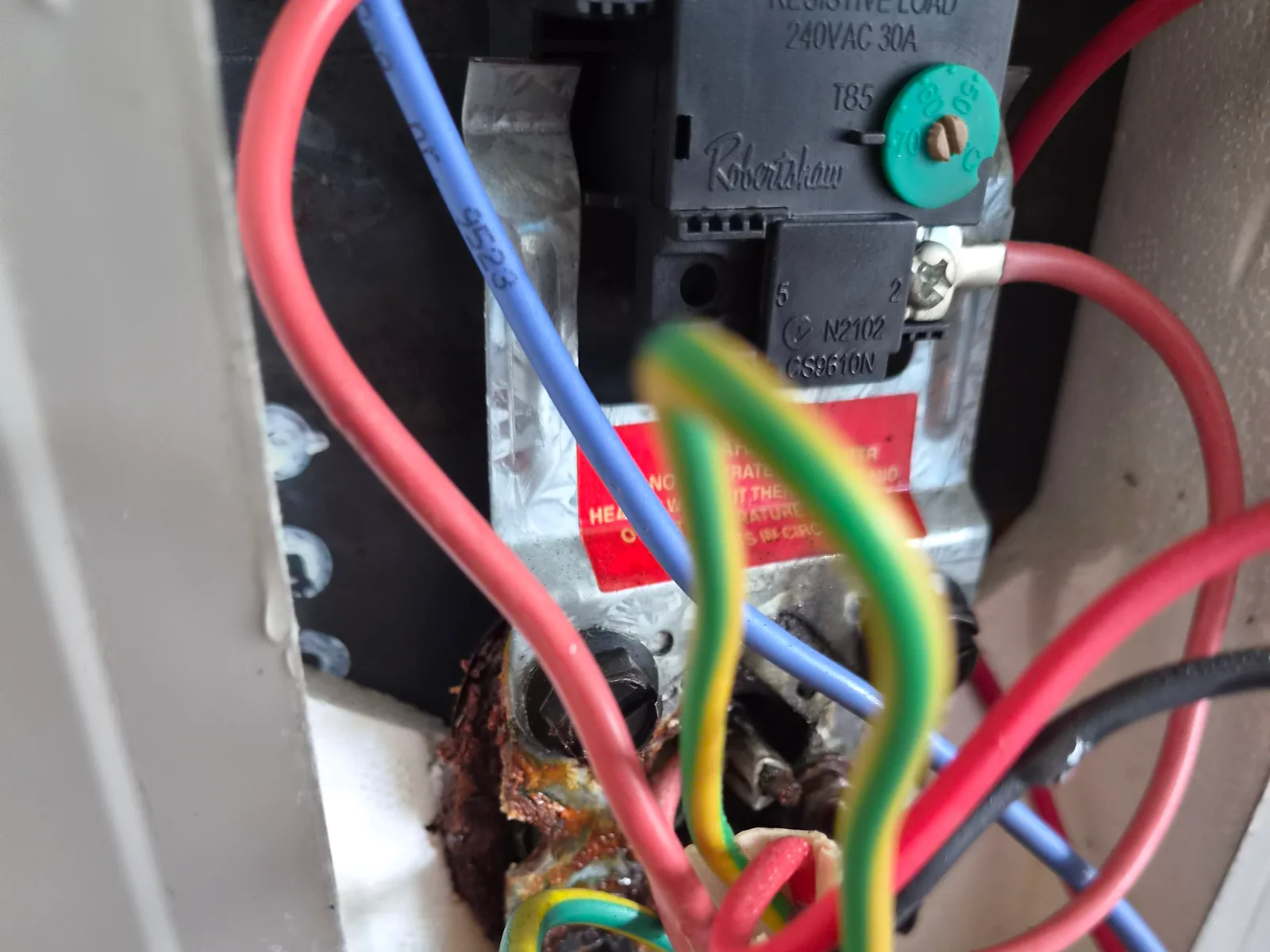
Bore water works on the other end of the tank. Iron and grit settle in the base, where they sit over the lower element and stop it shedding heat. The element runs hot and fails early, and the tank may rumble or knock as it heats. Replacing that element without flushing the sediment out usually means paying for the same repair again.
Flood history is the third factor. Low-lying ground around Mary Street and the river flats has been inundated many times, most severely in 2022. A hot water unit that has been under water can appear to work afterwards and still fail later, because the insulation holds moisture and controls corrode from the inside. A submerged unit gets assessed and tested rather than simply switched back on.
The housing adds its own repair constraints. A tank under a high-set Queenslander on a steep block is reached differently from one against the wall of a new build at Southside. Knowing where the system sits, and what the water and power supply look like, lets Richard bring the right parts and gear for that site.